 Music cafe
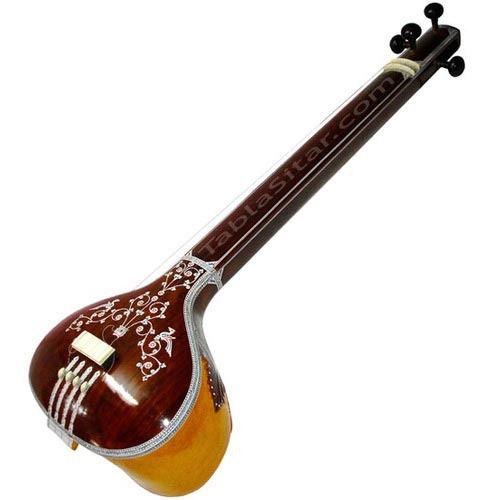
When there is a singer performing in Hindustani, there is usually a Tanpura,Harmoni accompaniment and percussion instruments.Hindustani use solfeggio, except the names of the notes are sa,ri or re, ga, ma, pa, dha, and ni (These are abbreviations of shadja, rishabha, gāndhāra,madhyama, pancama, daivata, and niṣāda). These are referred to swar. The vocalist may sing these in a performance.
When there is a singer performing Carnatic, there is usually a Tanpura, Violin accompaniment and percussion instruments. Carnatic use solfeggio, except the names of the notes are sa,ri or re, ga, ma, pa, da and ni (These are abbreviations of shadja, rishabha, gāndhāra,madhyama, pancama, daivata, and niṣāda). These are referred to swara. The vocalist may sing these in a performance.
Veena is a string instrument.Veena is played in Carnatic music. It is held in a horizontal position, and it has a hollowed out bowl on both of the sides.One of the bowls is held on the left thigh. There is a large body where there are many frets and an ending, where the strings over the larger bowl.A player uses their left hand to cover the desired frets and their right hand to vibrate the strings.
Violin is a string instrument. This instrument was adapted into Carnatic music by Baluswami Dikshitar. V.G. Jog is credited with introducing the violin to Hindustani music. In Indian classical music, the violin is played seated on the floor with the scroll on the musician’s right foot. The tuning system is also different from methods used in Western classical music. In Carnatic music, the violin is the most common instrument used for accompaniment.
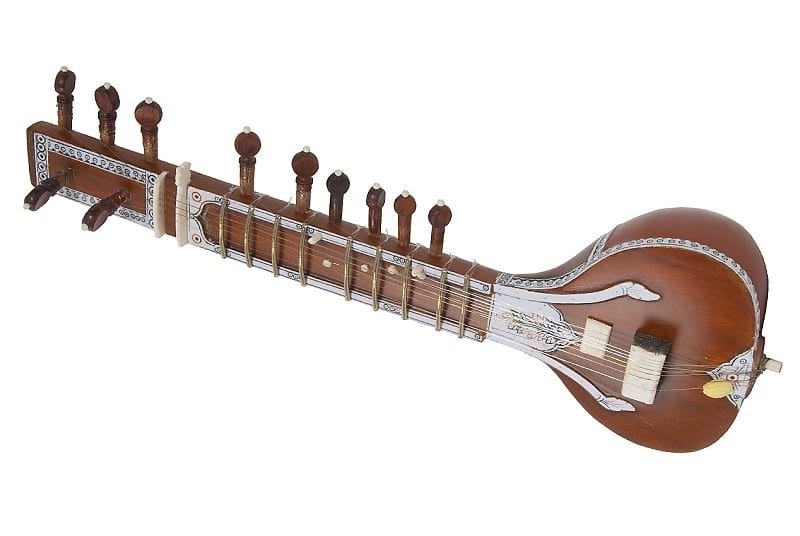
Sitar is a string instrument which has 13 strings. It is held at a 45 degree angle on the lap of the player. The player plucks the strings with a finger covering, while also covering the frets with the other hand. It is known as the South Asian lute.
Sarod is a string instrument from the lute family used in Hindustani music. It has a wide fingerboard that is fretless so that gamakas can be played easily. There are four to six main strings, and drone and sympathetic strings also. The Sarod player plucks the strings to make sounds.
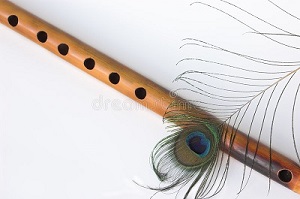
Venu is a wind instrument. The Venu is made out of bamboo, and there are two types of flutes that are created. A transverse flute is a bamboo stick that has holes in it, and this is the best for classical music. A fipple flute does not have the same structure and it is used in the creation of music for movies.The name of flute changes from region to region, but two of the most common names for flute are Veenu and Bansuri.
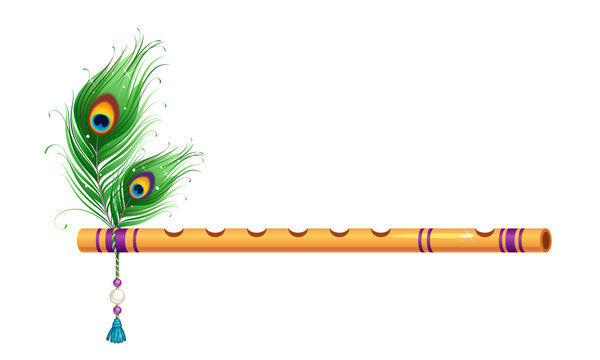
Bansuri is a wind instrument, and it is made out of wood and metal. It is used in temples and other places. It is accompanied by thavil or dolu. It is a very long piece of wood that has seven holes. The breath control of the nadaswaram is hard to master. It is also a reed instrument.

Nadaswaram a wind instrument, and it is made out of wood and metal. It is used in temples and other places. It is accompanied by thavil or dolu. It is a very long piece of wood that has seven holes. The breath control of the nadaswaram is hard to master. It is also a reed instrument.
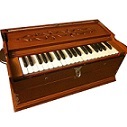
Harmonium is a wind instrument. The harmonium was created in Europe by Gabriel Joseph Grenié, and was further worked on by Debain. It was exported to India, where Dwarkanath Ghose modified it to be able to play Indian music. The harmonium initially was not very popular, but it was put into the spotlight by great Hindustani musicians such as Pandit Bhimsen Joshi and Ustad Bade Ghulam Ali Khan. It is now a very popular accompaniment in Hindustani music and has a place in devotional music.
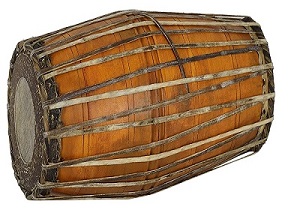
Mrudangam is a percussion instrument. The Mrudangam is a two headed drum used in Carnatic music. It is usually the main percussion instrument in a concert. The long barrel is made out of wood and the ropes across the sides of the instrument are leather. The heads, multiple layers thick, are made out of various animal skins. On the right head of the instrument, there is a black circle made out of a dried paste of ashes, boiled rice and fine flour.
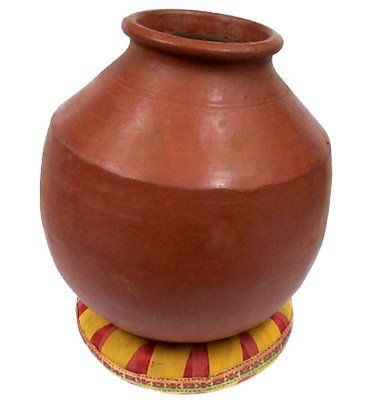
Ghatam is a percussion instrument. A Ghatam is a Carnatic percussion instrument that is a large pot made out of clay. This has a small opening at the top. Ghatams of different sizes are used for different pitches. The Ghatam vidvān (artist) sits on the floor and plays the Ghatam in their lap. Sound is made by striking the pot with one’s fingers
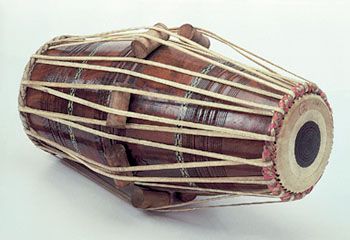
Pakhawaj is a percussion instrument. Like the mridangam, this is a two-headed drum with a smaller and higher-pitched right head and a lower and larger left head. The barrel shaped body of it is made out of wood. Both heads are made up of several layers of animal skin. There is a black paste applied to the right head, but on the left head, there is a temporary paste of flour mixed with water applied. This is a more sensitive-sounding instrument than the tabla and is used in dhrupad singing. This is mostly used in Hindustani music also.
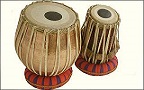
Tabla is a percussion instrument. It is a pair of drums that is mostly played in North India. One of the drums is of higher pitch which is called the daya. This is higher pitched, and made out of wood. The baya is played with the left hand and has a lower pitch. It is made out of copper. There is a black circle on the drums that helps with generating different pitches.